A chronicle of movement aimed at synchronizing thoughts and keyboards with said movement.

4.12.2006

THE RETURN!

Dear shortchanged readers,

I'm back, but only for a few sentences, to explain and beg your forgiveness for my absence. The past couple weeks have been marred by the finishing touches (and beginning touches) of our internsh portfolio, a 40+ page volume which BU makes us write to prove we gained invaluable academic experience in our time in Britain.

I mostly just solidified an intimate relationship with Google. The internship's been mainly awake sleeping, just sitting in frontof a computer until one of my editors asks me to research something. It's truly ajournalistic joy.

But also: my computer screen has, appropriately, died. It was about time, knowing my healthy history with laptops. So I'm writing this from work, where there are no pictures to post...but I'll try to load up some of them soon, too.

Things:
--Trip to Wales that involved jumping off of cliffs into heavily-safeguarded water and almost seeing sheep jump off one into the lurching sea.
--Tay visit
--Irish festival
--Other pictures filled with colours.

I miss all of you quite much and am currently dragging myself through these final two-three weeks. Gooodbyyyeee

3.28.2006

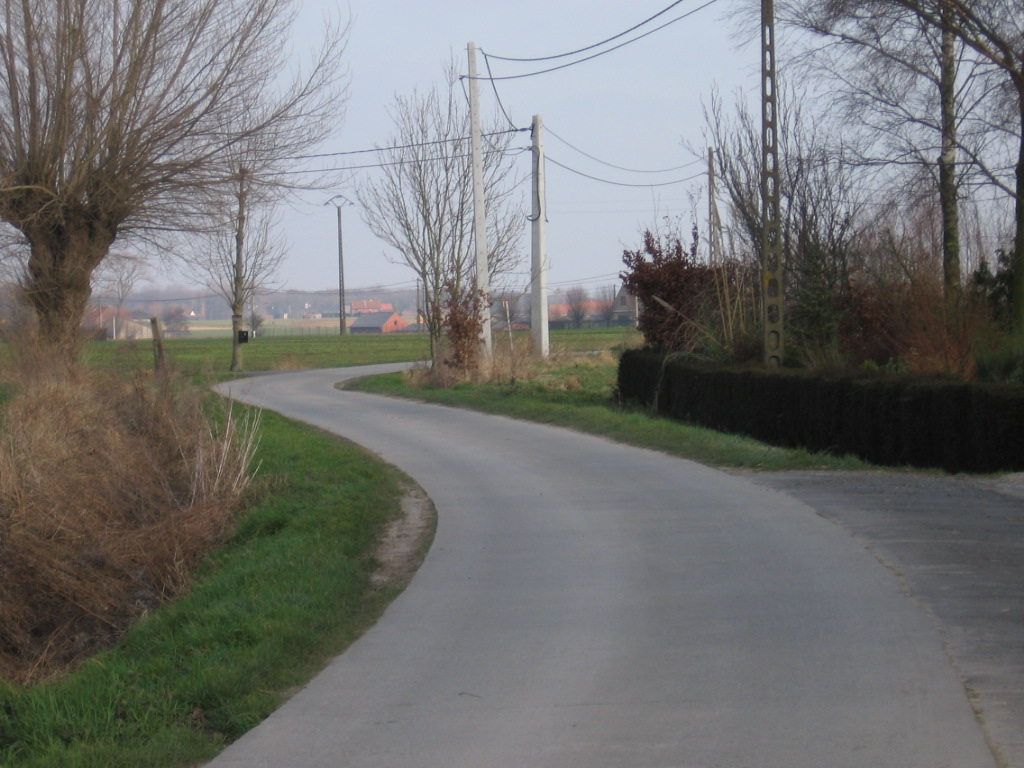
The Road to Westvleteren, taken

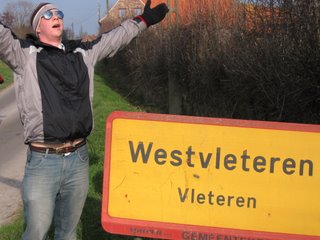
Arrived.

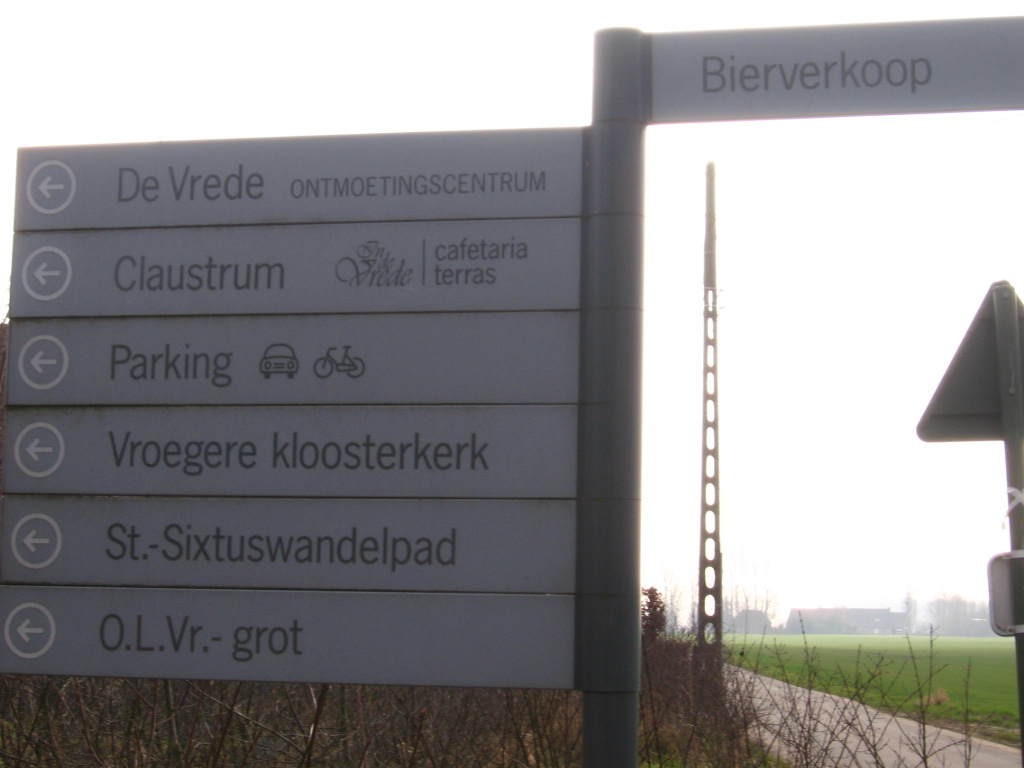
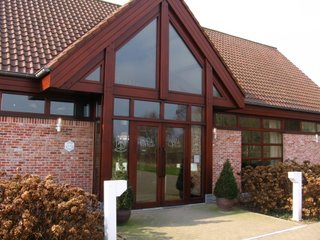
The signs are easy to miss, no larger than a forearm attached to a wooden spike. Surely, designed only for the purest of heart. And you don't know you're there until you come up on a set of buildings that look like anything you've just cycled past for the past 30 minutes.

But that could be because your eyes have turned to frozen Vaseline from the cold.

But you arrive. And you rejoice, because the Vision Quest has neared its peak. Matt Modine would be proud. He'd be smiling that big American smile, those toothful American grins you miss so much when you're in London.


The cafe, De Vrede, sells the beer most of the week. During the summer months, a drive-through kiosk sells it, so you can quench your thirst on the drive home, undoubtedly.
E.N.T.E.R. Young Travelers...
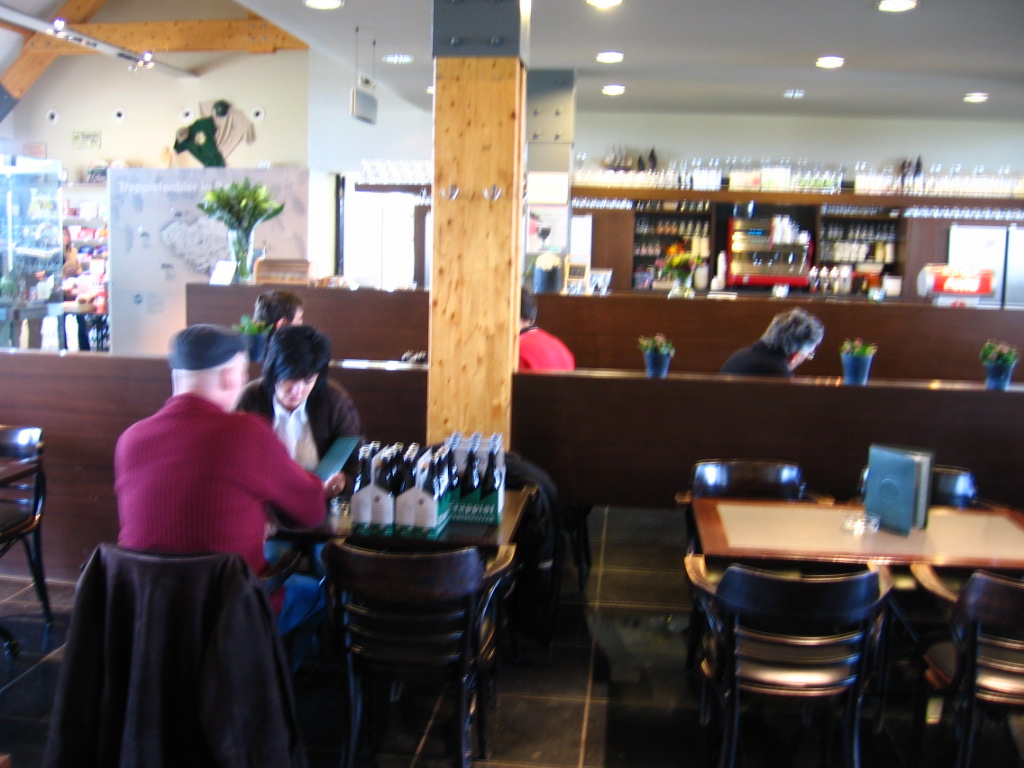
The cafe brought together locals -- who I can imagine come here every weekend after going to church and while their Belgian children to do their Belgian chores, like cleaning sheep -- and people from all over the world. Languages collided here like the stretch of Boston where Chinatown melts into Government Center and melts into the North End.
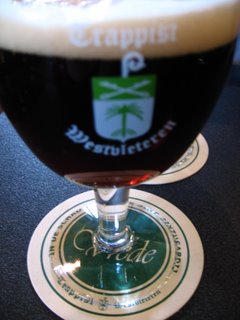
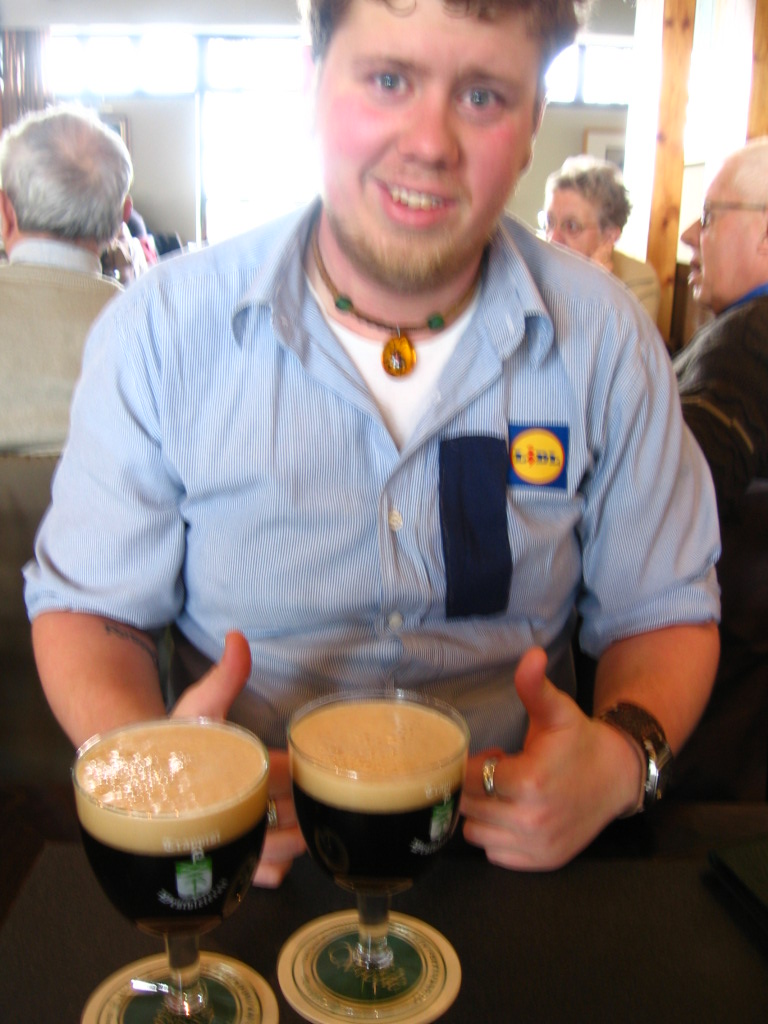
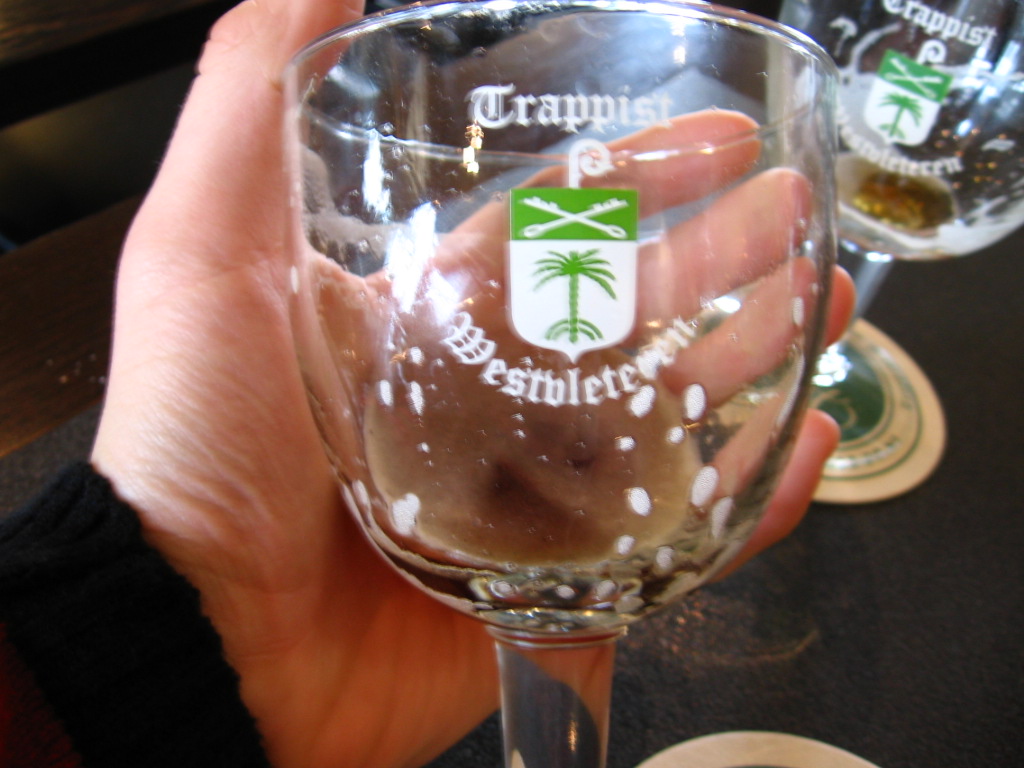
Oh yeah, and it also had all the different Westie beers on tap. Including the best one in the world, 12*.

And there it is. Almost don't want to drink it.
Almost.

Six trappist breweries, circling round Belgium. Good London and world bars carry every one of them, except for this one. The reason: the monks brew just enough beer to keep the monastery going. They say they live for their prayer, not for the beer -- not like those sellouts over at Chimay. I bet they share some full-bearded laughs at those forlorn souls.

So we contributed to the monastery fund.
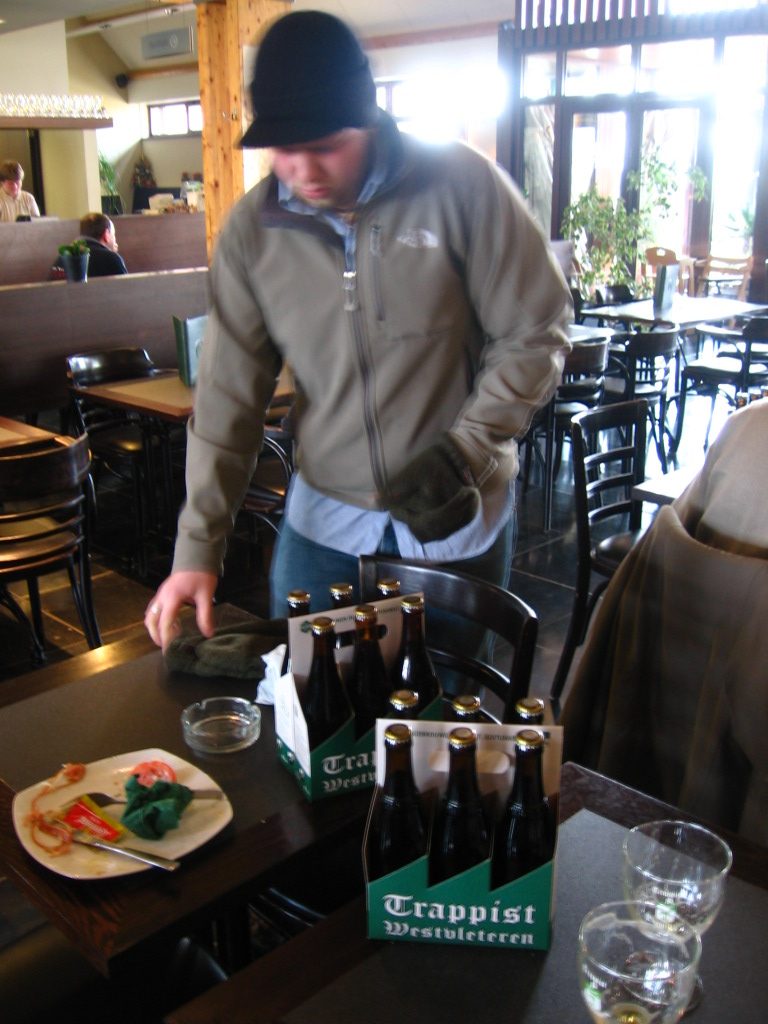
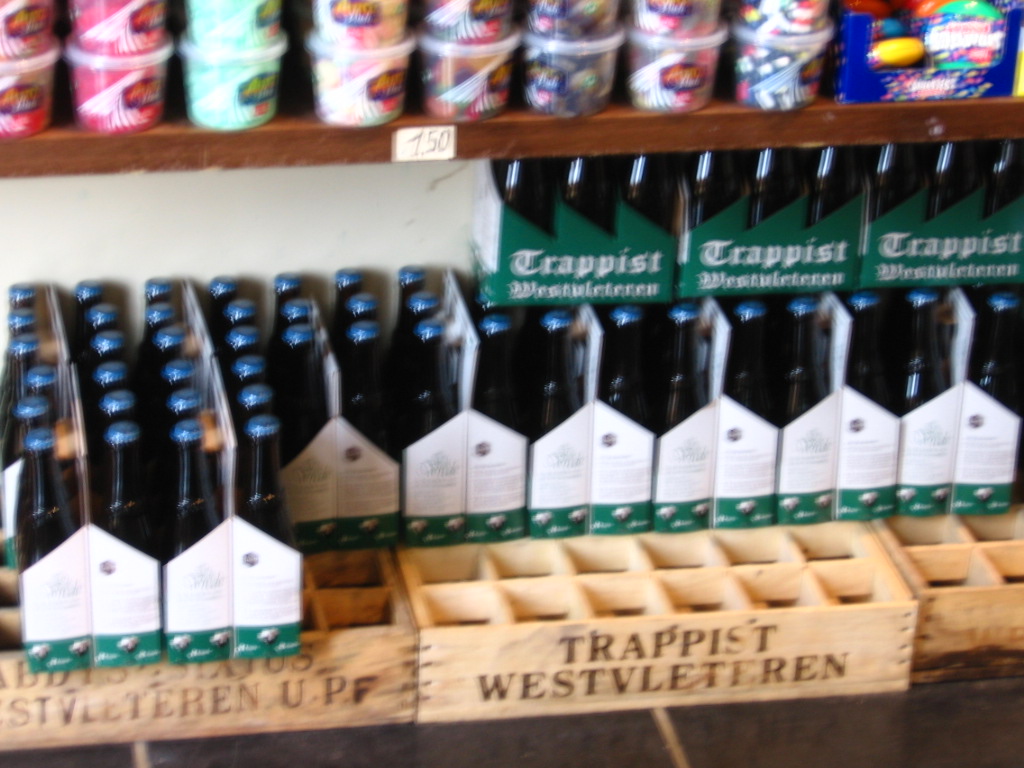
Crates. Crates everywhere of this delicious beer. Made by people who make it their life's work, because the Trappist/Benedictine Order preaches community service. Not too many better services to render.


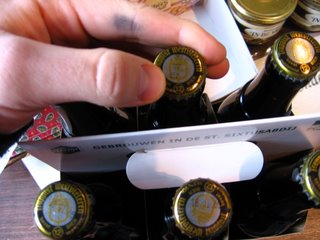
The bottles are bare, just black/brown. The only way to identify them is from the cap. This, my friends, is Westvleteren 12.

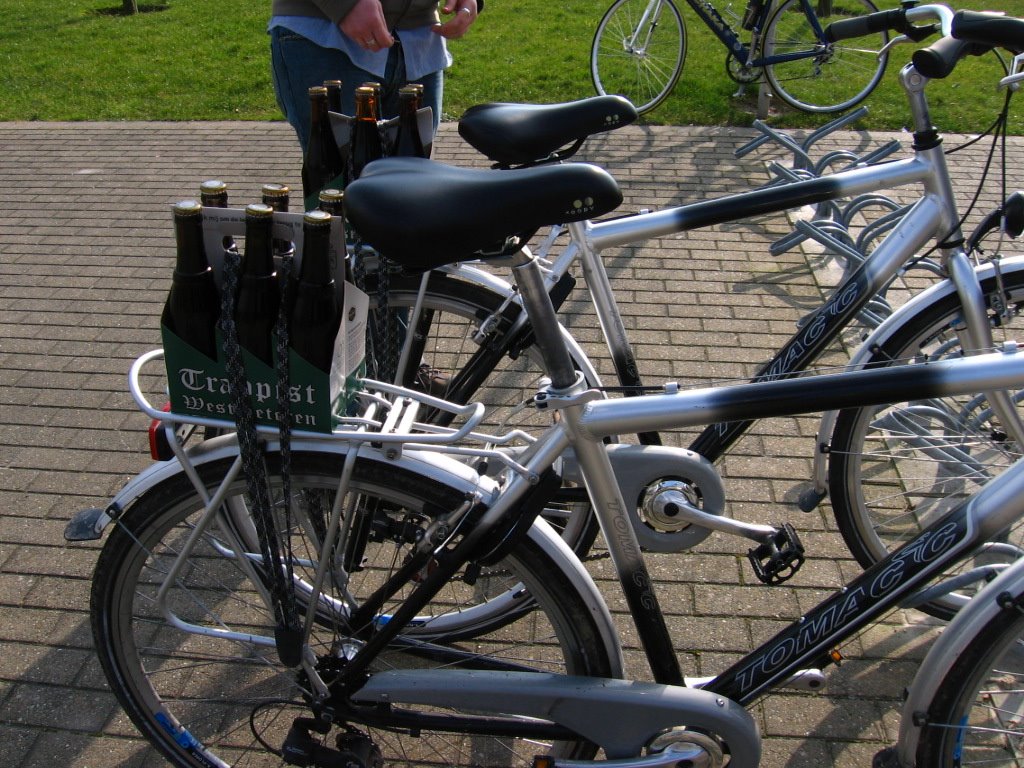
It took us about an hour to get home. We treated it like we had immigrants in the back of a truck. Immigrants carrying Westvleteren.

3.23.2006

Poperinge and the road to Westvleteren

We continued through Poperinge, bike-topping and in pursuit of something that we were sure was there. And the nice part about looking with Nils is that you'll generally find something.

We left the church, outside of which we had not chained our bikes because there was nothing to chain them to aside from a large tree or small dog. We chose the humanitarian approach, figuring Belgians would not steal a bike from outside a church, lest a nun come and fire excommunications at them.

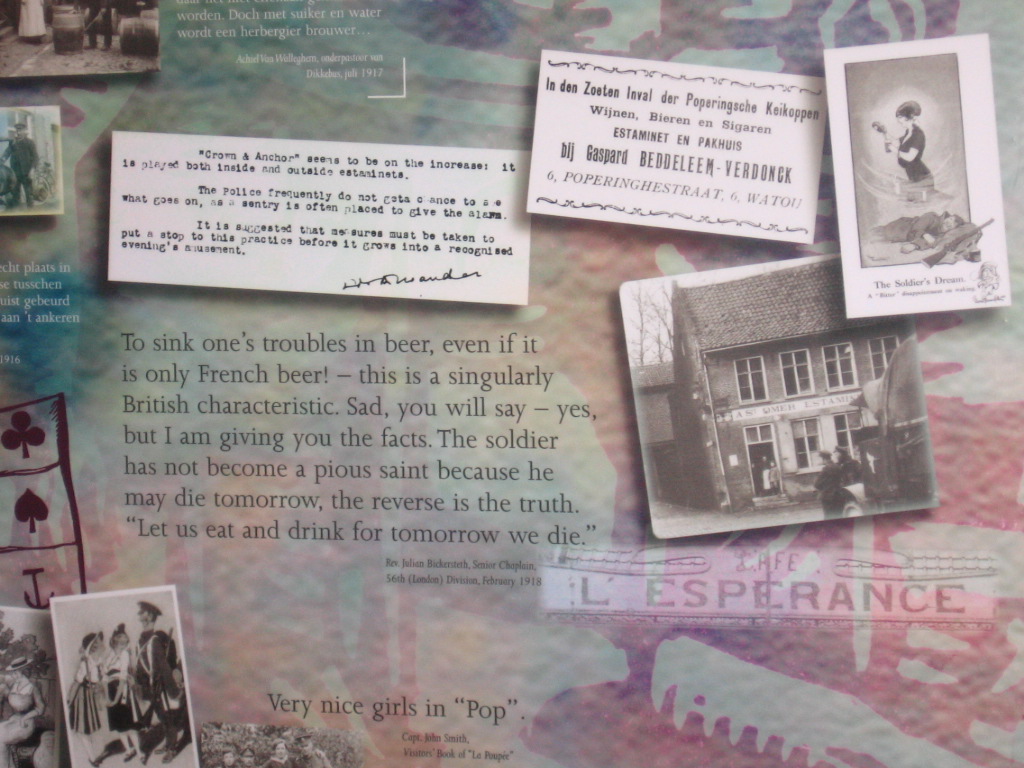
We biked back into the center of town. It was noon. We were not yet hungry enough for food. So we toured more. And arrived on an ex-soldier retreat for the Brits in WWI. It probably doubled (hell, it probably singled) as a brothel, but was a big mansion-house with a bunch of different rooms devoted to giving the troops diversion from the blood and their guns just miles away. Some guys would tell the chaplain there stuff like 'I'll probably not make it back this way again, father, so pray for me.'

War sucks.


But museums about it don't.

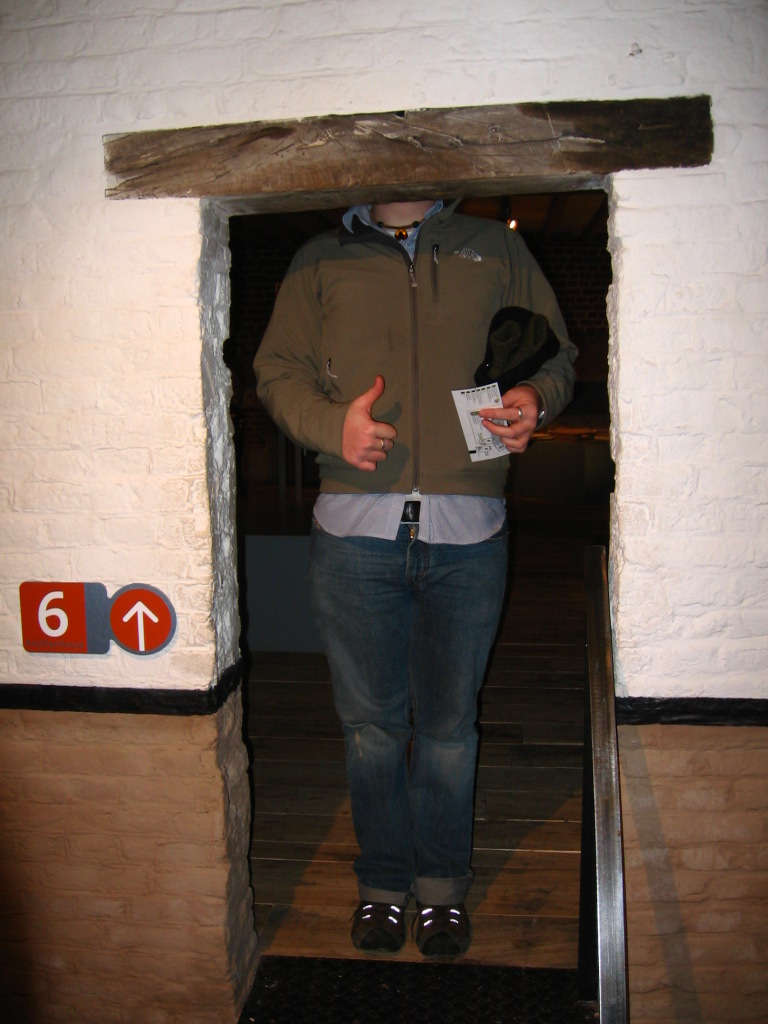
Nils proves that he did not sneak into the museum with a ticket.

The opening room, a cavernous square, had all these different signs that showed the different correspondences to and from the battlefield and soldiers' hometowns.


Soldiers today, like Nils, make such better targets.

We sat, alone in a room, and watched a sepia video about soldiers watching Vaudeville-type actors dance about and make lilting jokes about the war while blue smoke crept to the ceiling.

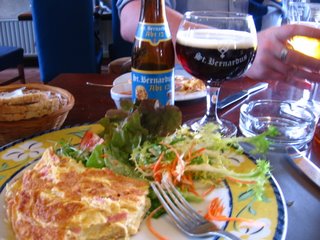
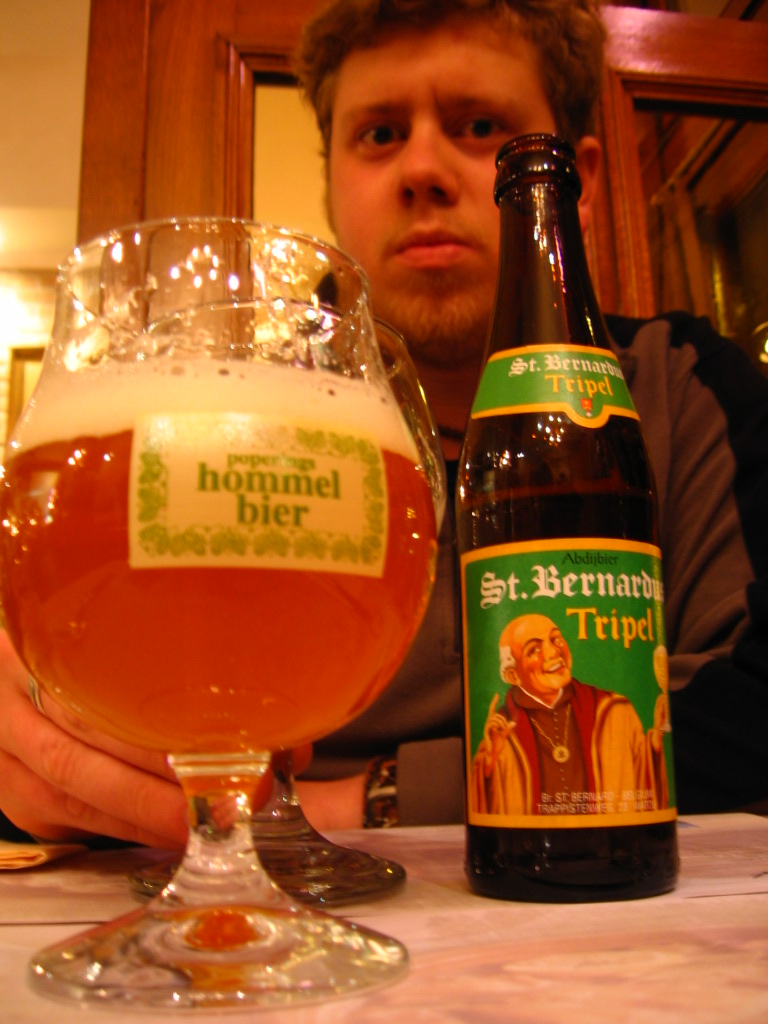
We got lunch afterwards, eating at a cafe right around the street. Lambics and omelettes (much to the annoyance of the staff, the omelettes were) were had. Oh yeah, and St. Bernardus Tripel, regarded as the second-best beer in the world.

The best one would come soon, soon.

And later, so was Dr. Quinn, before our love-cookfest!

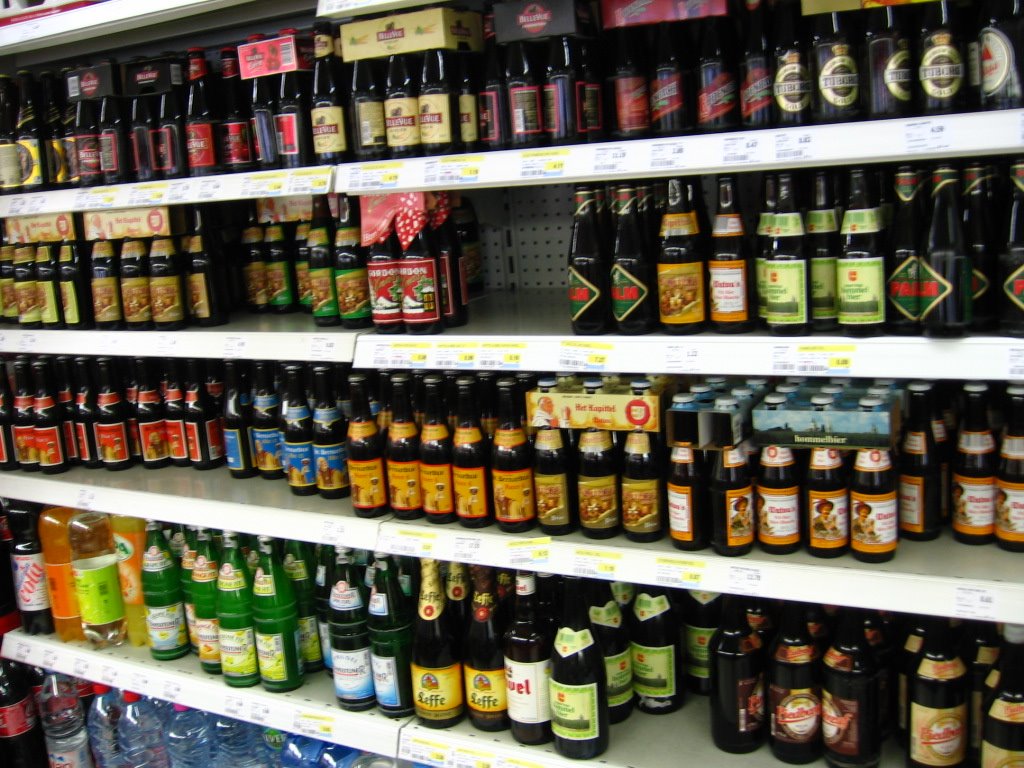
Belgian supermarket = Belgian beers. It hurt to leave.

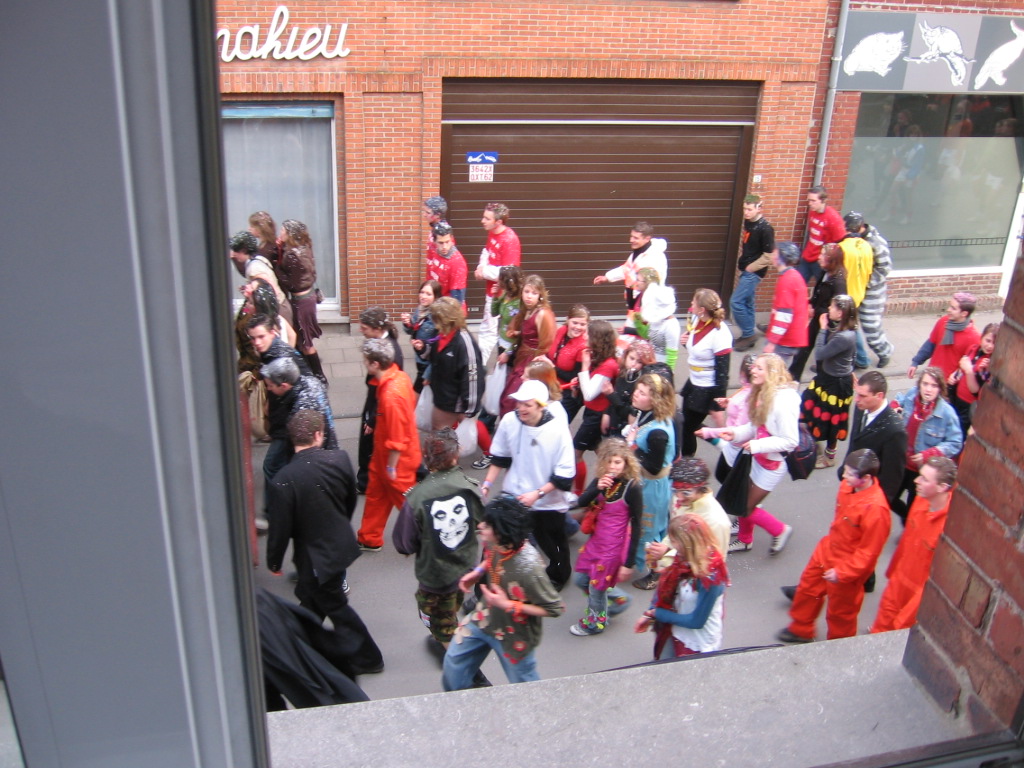
Kids parading, again, for Carnivale, the European Mardis Gras. This happened all night long, a lot like high school homecoming parades, with flatbed trucks and high-schoolers dreaming of the golden and definite future.

This is sleep, now.

Yup, more racism.

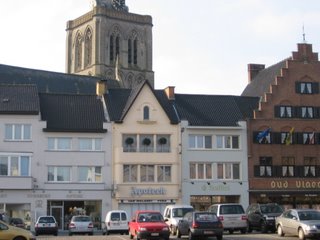
On bikes, taking a picture of the town center before we embarked on THE VISION QUEST.

For beer enthusiasts, Westvleteren is mecca. There are six Trappist breweries in the world, all in Belgium. The trappists, a form of the Benedictine Order of monks, brew some of the top-regarded beers on planet Earth, in short because they spend their entire lives doing it. Beer is their service of God.

Refer to the postings on Rome for my views on religious mission.

But anyway, the town sits 5 km north of Poperinge, so we set off.

The cold felt like constantly being slapped with brooms covered in ice. Mucus dragged along cheeks, like plows on fields, eventually flying off if they didn't freeze to facial hair. Well, Nils' facial hair. Even after a week, my face still was Sammy Davis-smooth.


Sheep! Nils got very excited, for obvious reasons.

Finishing tomorrow!

3.22.2006

Poperinge

But at any rate, because of the fall, we had to bring an end to all discussions of returning to Cologne, instead choosing to forge forward, one great forward push toward the end of our Vision Quest. This meant we'd enter our final country, Belgium.

On Saturday, we'd take the train back to London from Brussels, but in the meantime, we had to find the mystical monastery where the best beer in the world is brewed. Of course, just as Matthew Modine had to realize in Vision Quest (http://www.imdb.com/title/tt0090270/), such a journey requires the willful submission of oneself to time, and the blind pursuit of a ghost.

In order to reach our outpost, Poperinge, we had to travel 6 hours from Amsterdam, connecting in Brussels.

Three hours from now, on a train with broken bathrooms and bloated bladders, we made it to Poperinge, the town most west on the Belgian rail. We arrived at an almost entirely unlit train station, night and silence surrounding us and only pushing forward our quest. A kind man at the train station told us where we could find a hotel that would rent us bikes.
So we walked.
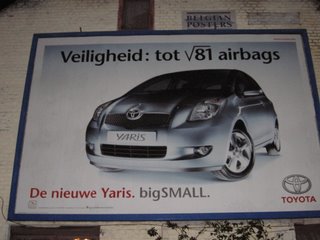
The Belgians think they're so smart. They can do math on billboards.
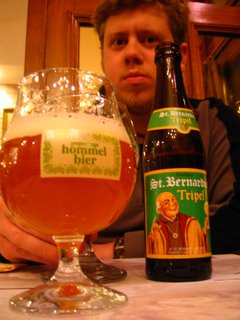

We checked into our hotel, as the only inhabitants. The stares we got would have shamed Sinatra; people looked at us as if one of us had considerable skin on the left side of his face absent. But we checked into our hotel, which was run by a sweet and frenetic woman and her thorough and bearded husband, who sat in a half-lit corner with a friend, draining glass after glass of Poperinge Hommelbier (the local beer, hommel being Belgian for 'hop')

HISTORY LESSON BREAK.

Poperinge, about 5 miles from Ypres -- one of the major sites of WWI, blown to smithereens as we would have said back then -- used to be a retreat for British soldiers. Around since middle-aged times, it's now the hop capital of the world, where the hops that go into thousands of beers are grown.

BREAK IN!
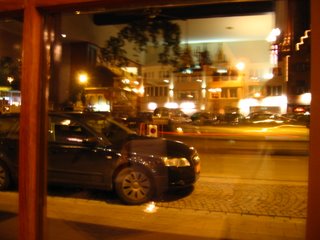
So we drifted off to sleep with visions of hoppy deliciousness floating around...
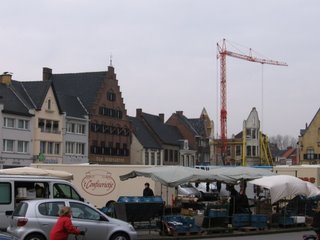

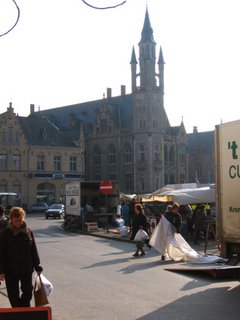
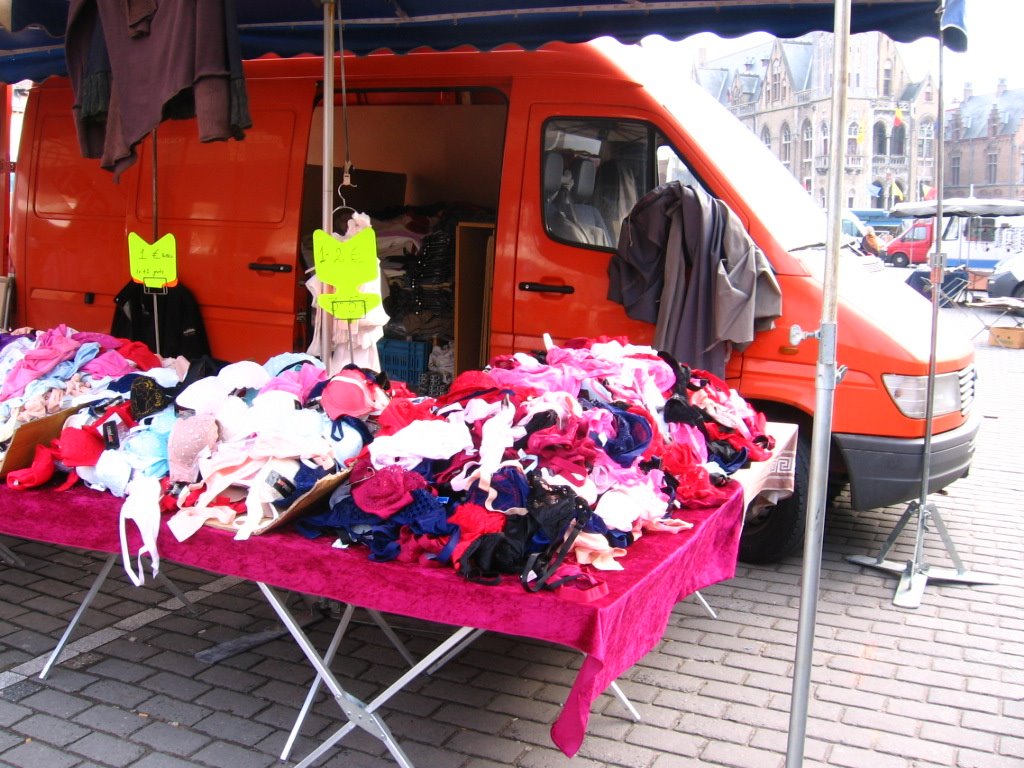
...and woke up to a market! Big market in the center of town (a small town with a large center) that's been going on since the 1200s! Almost non-stop, it's persisted.
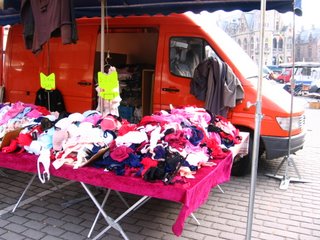
We didn't buy any, but I'm sure over 800 years, someone's bought lingerie.
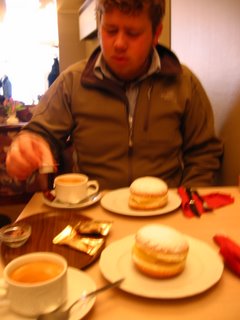
Instead, we continued our immensely fulfilling daily ritual, with some Belgian doughnuts because we knew they'd be nutritional and full of sugar and deliciousness, both important contents to fortify us against the oppressive cold that would meet us.
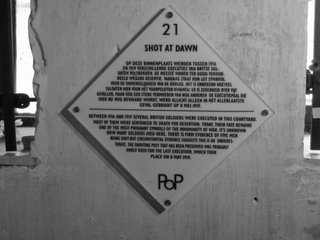
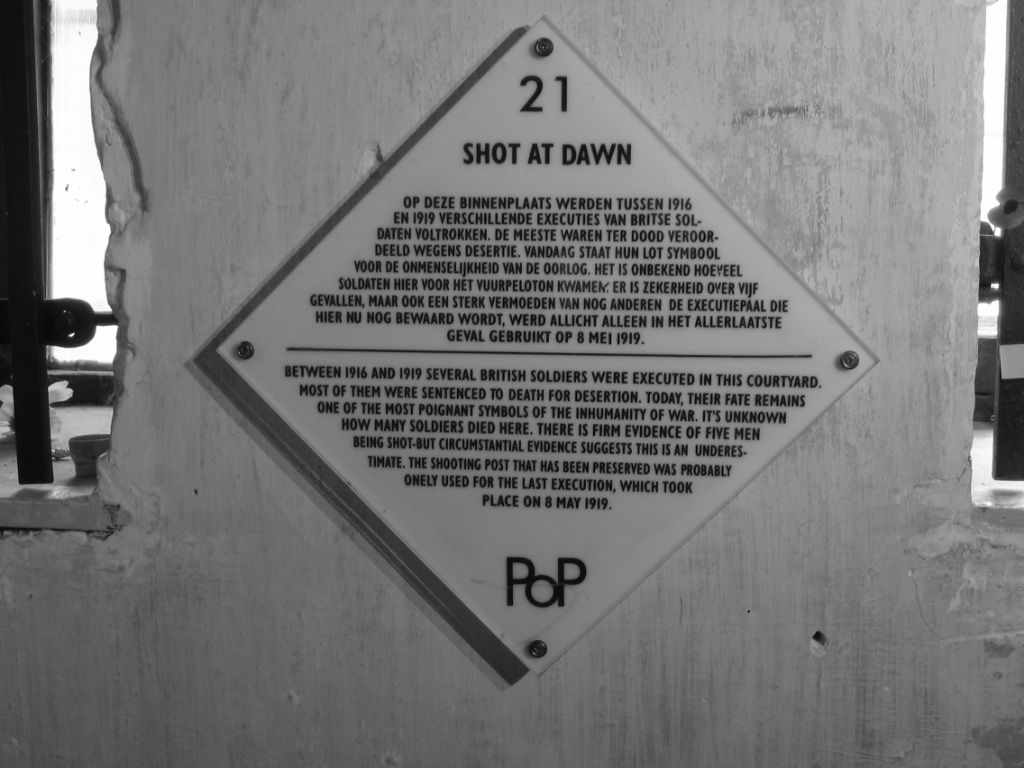
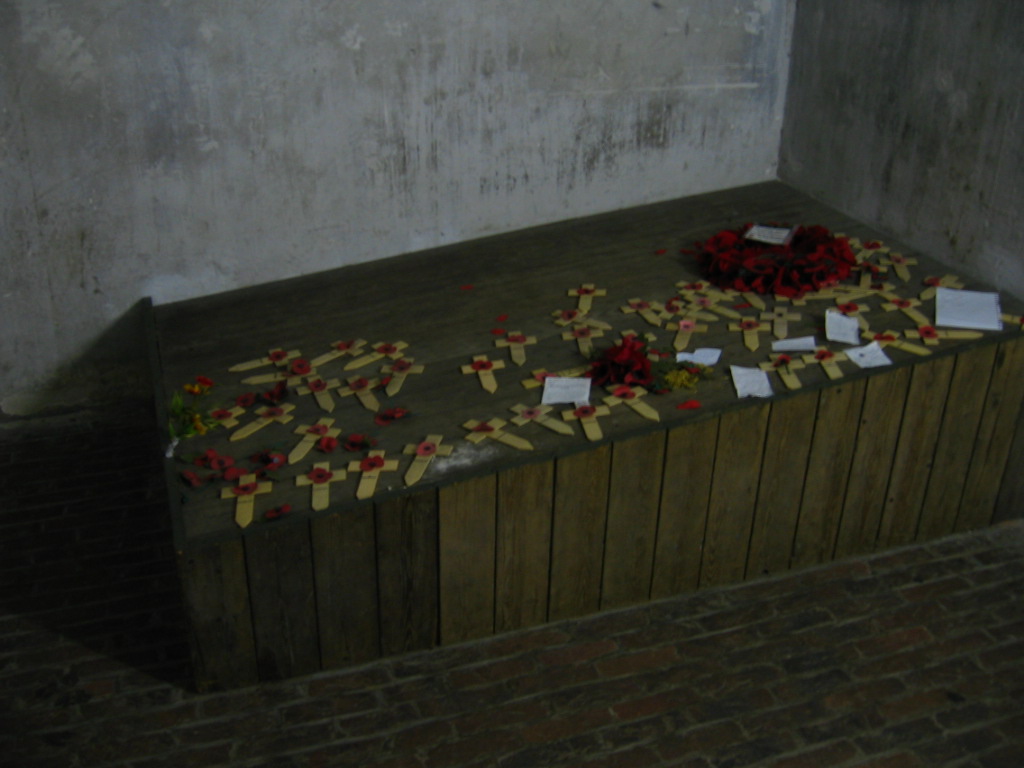
One of the most unfortunate parts about giving the British access to your town during World War I is that they take deserting soldiers (who were found to be deserting) and shoot them in your courtyards. Walking around town, we came to this really touching exhibit.
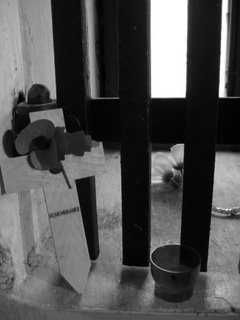
People come from all over to Poperinge, especially in summertime, and drop flowers and cards here. They're usually written in English.
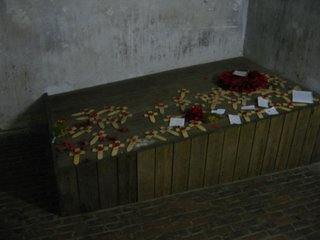
All flowers & crosses, mainly 'you will never be forgotten.'
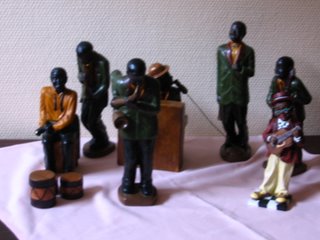
You know how black figures like this, ridiculing black people, are taboo in the states? Yeah, a big box of 'em got shipped off to our hotel. But these nice little figures bid us goodbye as we got on our bikes and prepared to cycle around town, a day before we'd head to Westvleteren.
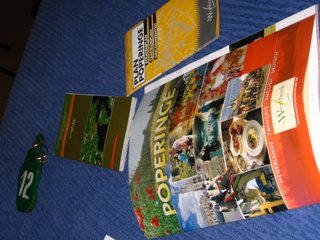
Kind of an eery site at the entrance to town. It's a hop, inside of metal bars. I wasn't sure what they were there for at that point.
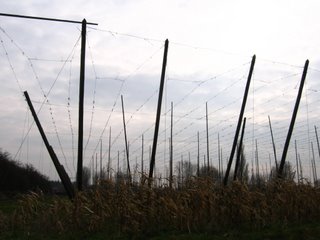

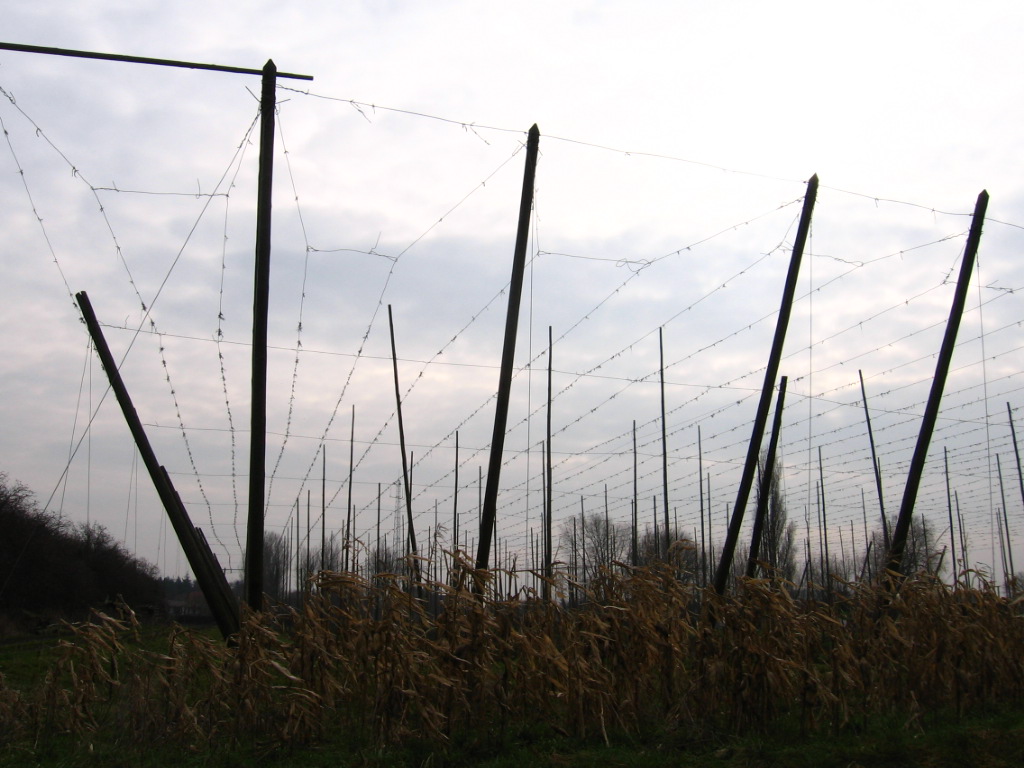
And this is a hop field. The hops grow up on these big metal poles. Aha! Learning!

Having intended to bike to Ypres, the cold lapped too hard on our faces, so we pulled back and headed back into town for more exploration, leaving the broken WWI history for our next visit.

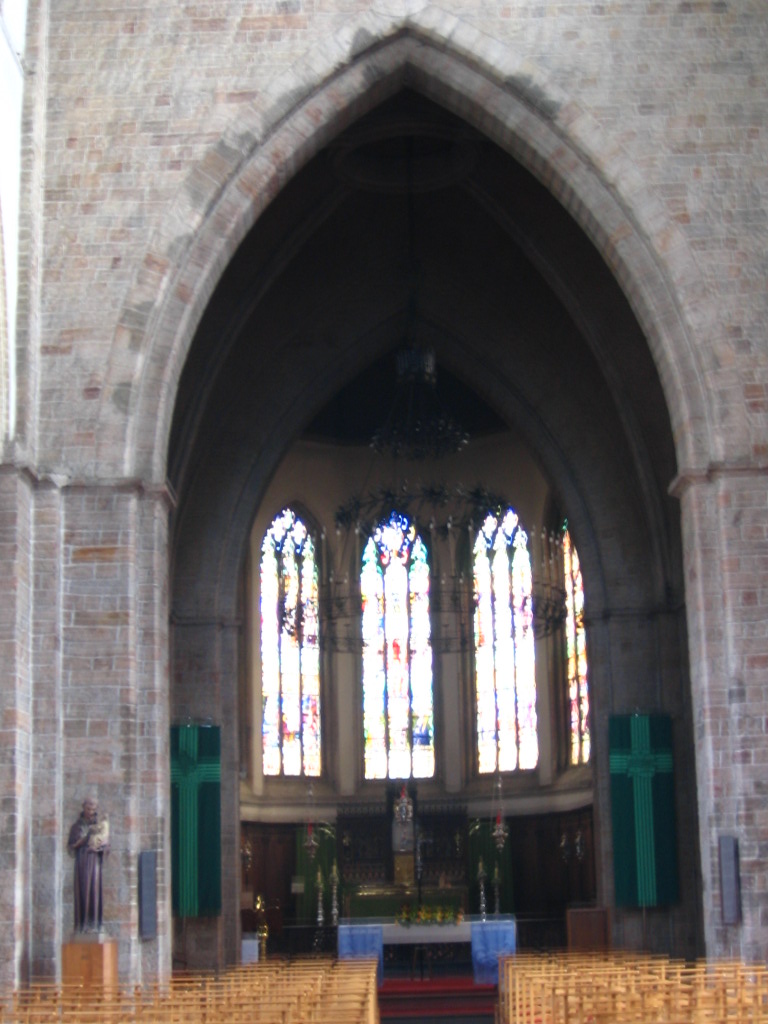
With great luck, we arrived on a church, which ended up being far cooler than we expected.
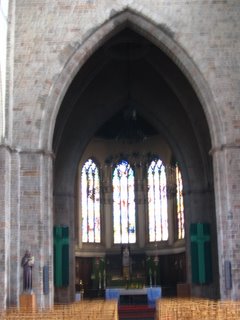
We sauntered around the church for a bit. Pretty big for a small town.

BECAUSE IT HAS A RELIC.

According to legend, an unbaptised child died in town in the 1400s and his parents brought him to the altar here to pray to the Virgin Mary. They left him there, and a few days later, he was alive again. They baptised him immediately and an hour later he died.

Nils says he died because the water was too cold and he had just come back to life.
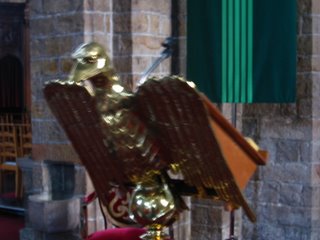
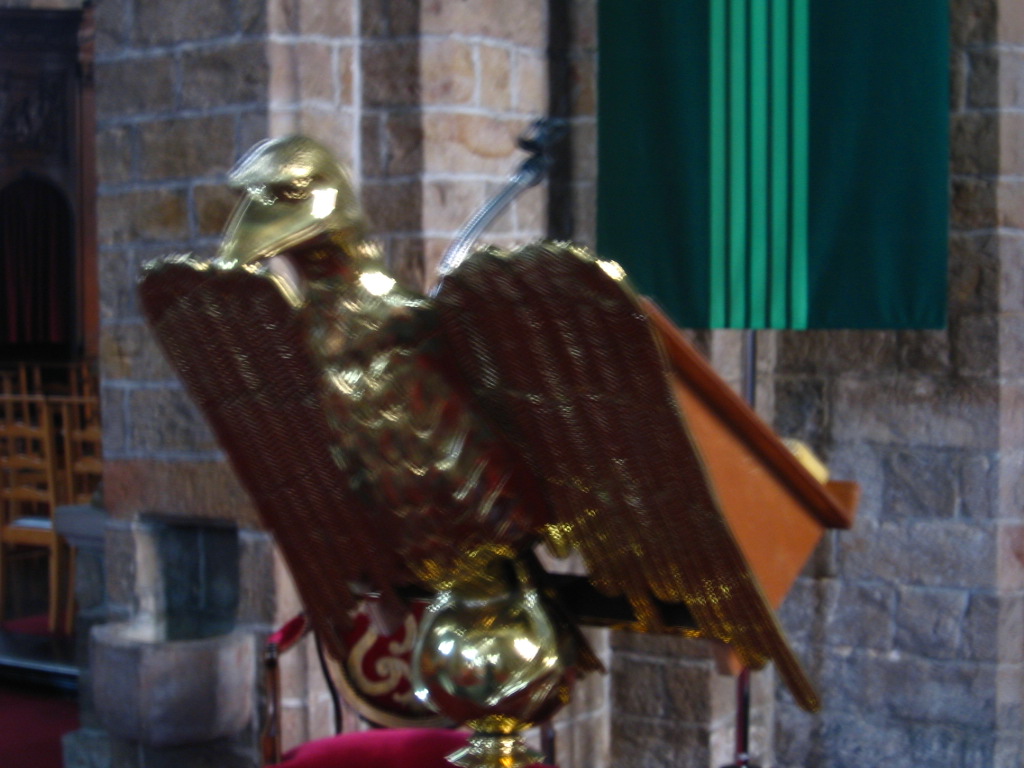
And the golden hawk agrees with him!
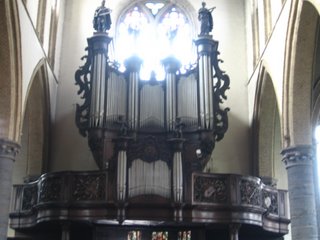
The big organ at the back of the church did not, though.

Now that I'm back to groovin', we'll get more posts a-coming. Goodbyyyeee

3.20.2006

Colochos,

So sorry for the lapse. London had to receive my full attention this weekend, owing to the lady's presence here. There'll be pictures of that later, but the author's mind has now re-sharpened, alive with the burst that comes with having your girl next to you. And in reference to the delay in postings, since the internship started, the adventures have subsided a bit, stomped by a lack of desire to spend more time on the internet after spending all day researching football stats on Google.

3.15.2006

The Dam Breaks

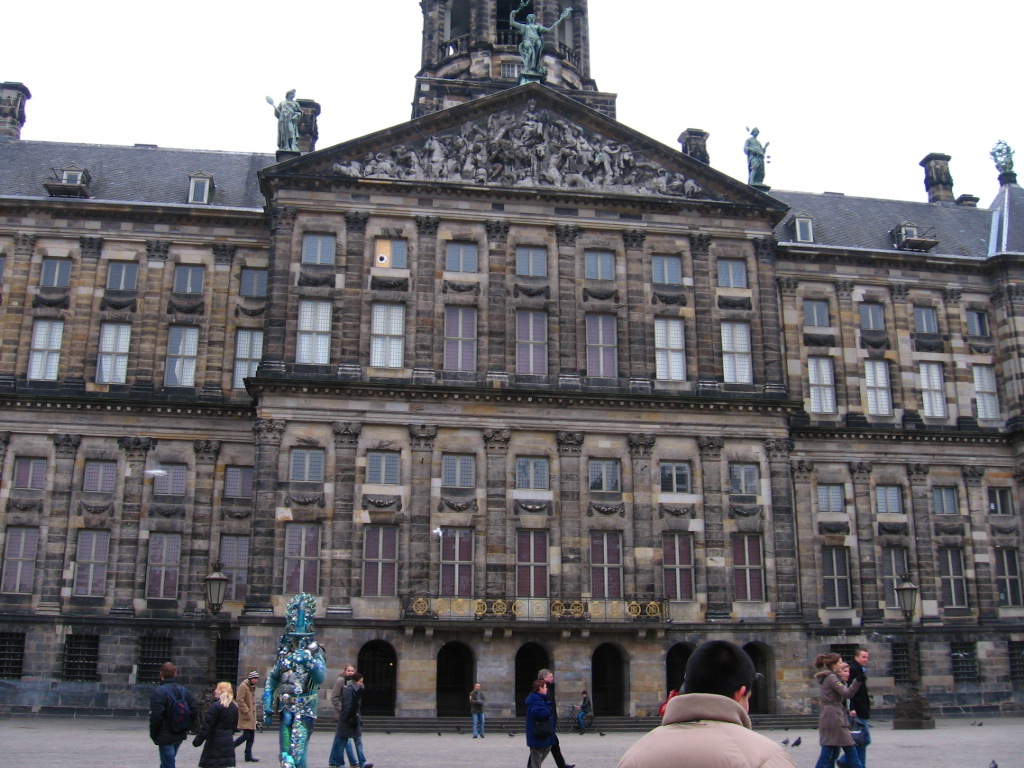
We spent the next few hours cycling around Amsterdam in concentric circles, finishing each swoop at this building right near Rembrandt Square. Every town has one of those places, a focus through with all motion goes, from Amsterdam to Munich to Boston to Northampton, Pennsylvania. But the biking continued, speeding through a city because we are young and because we are able and because, life is just renting energy from the air, taking care of it and making sure to keep it in good hands.
So the rest of Amsterdam, THE RED AND BLASTED CITY, goes...


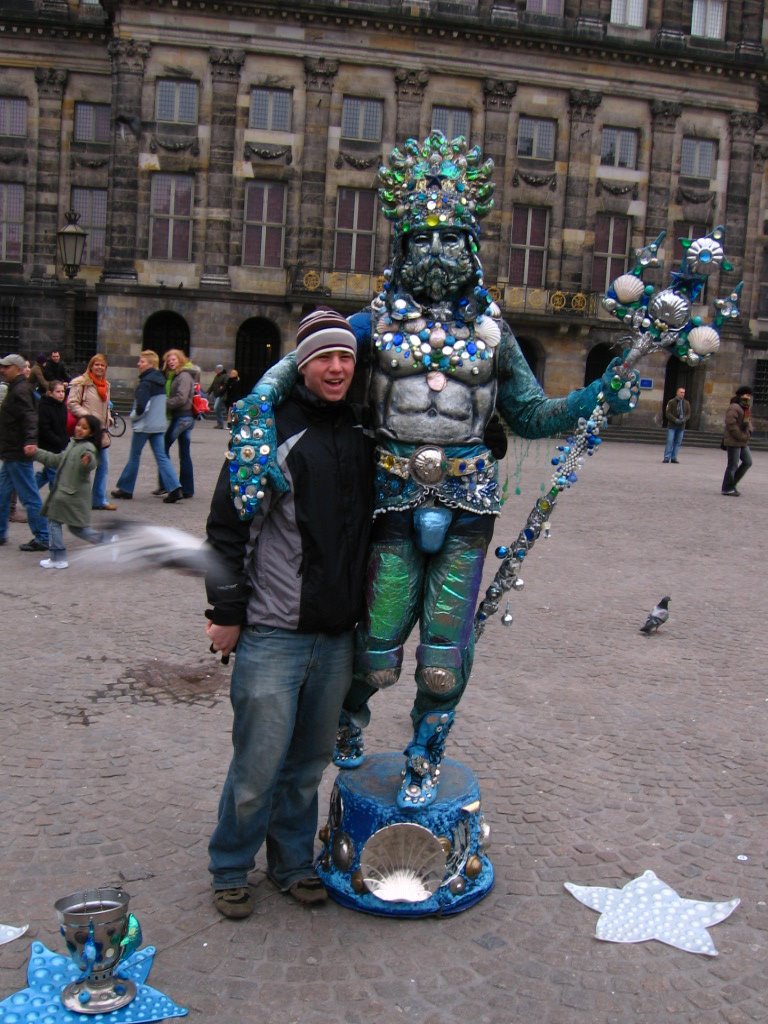
He has a cogpiece. Is that how they're spelled? Cog-piece? But after I snapped a picture of him originally, he grabbed the cog-piece. I gave him a Euro, stood next to him and he grabbed me.

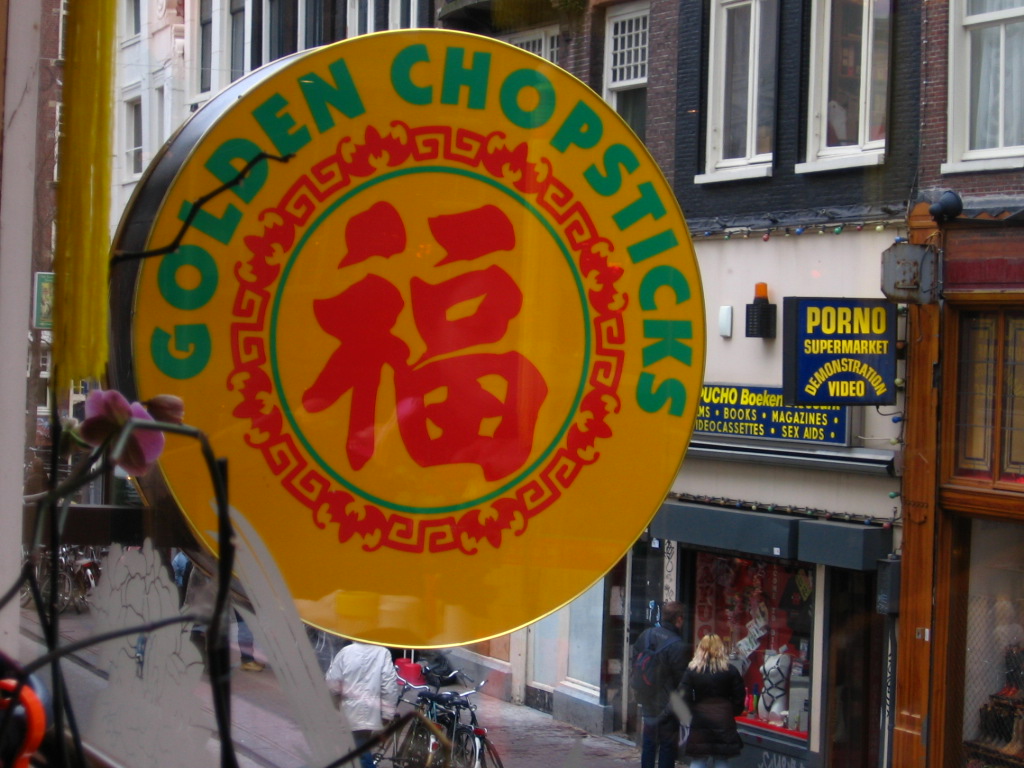
Our energies a bit depleted, we stopped at a solid Chinese place, which Nils said must be good because it was full of Chinese people. He was right. Good view across the street, too.

Same view on almost every street.

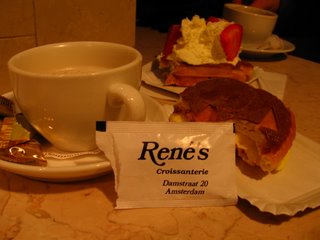
And, as usual, we had to break for our daily cholesterol implant.
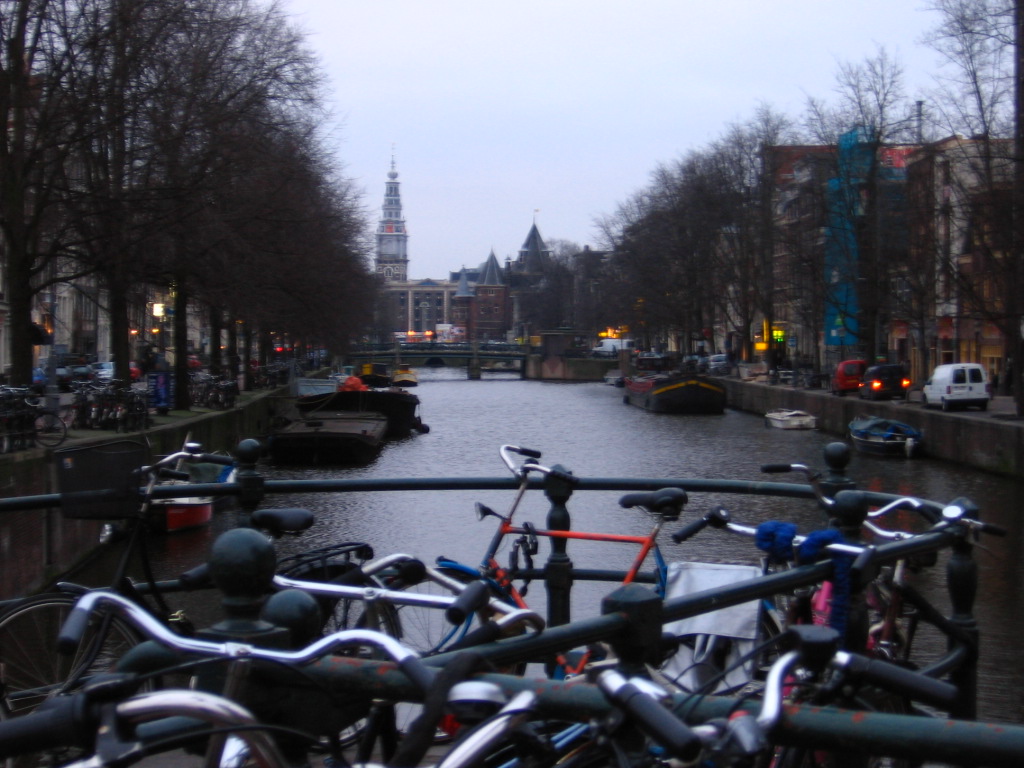
And glamour shot.

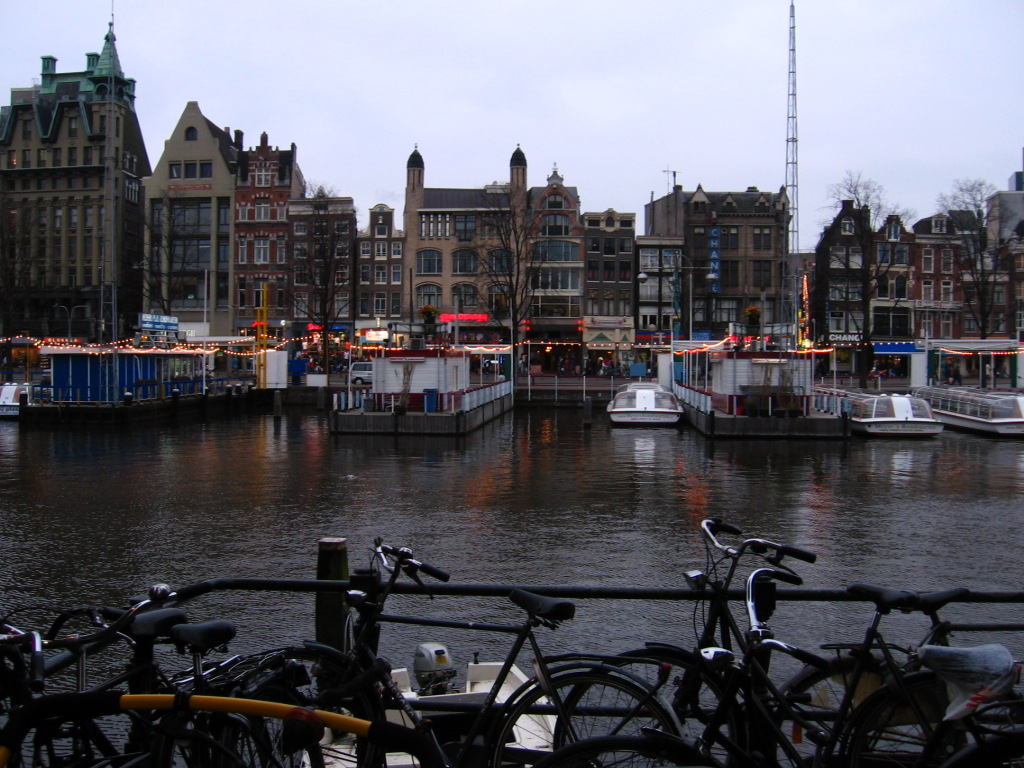
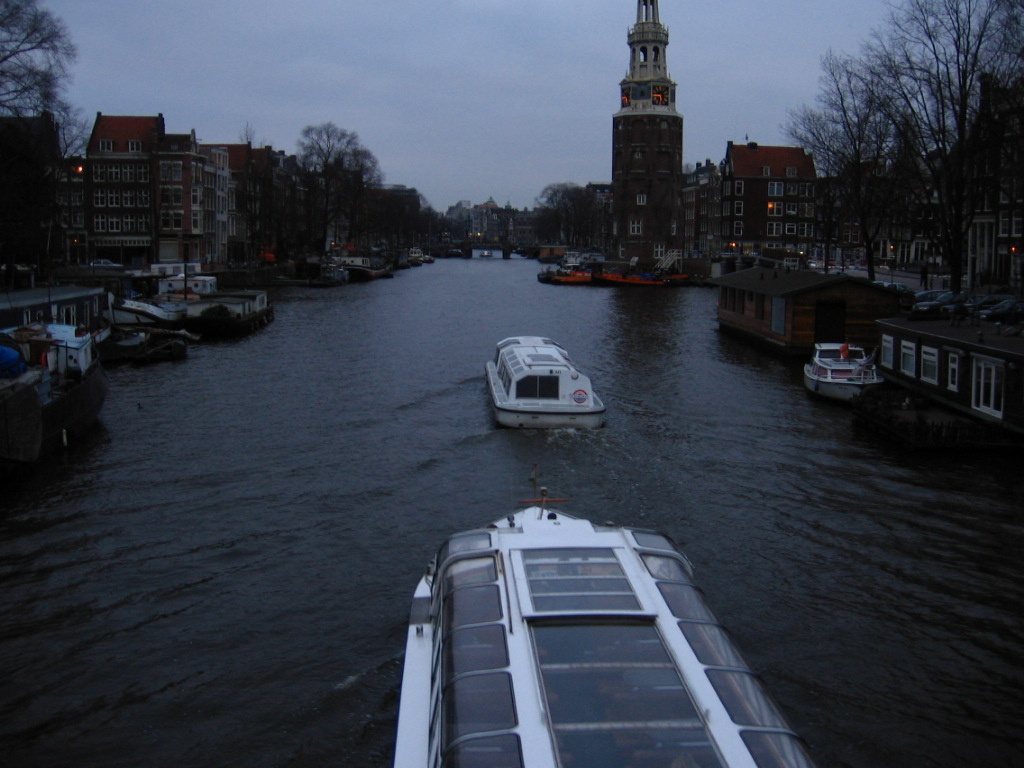
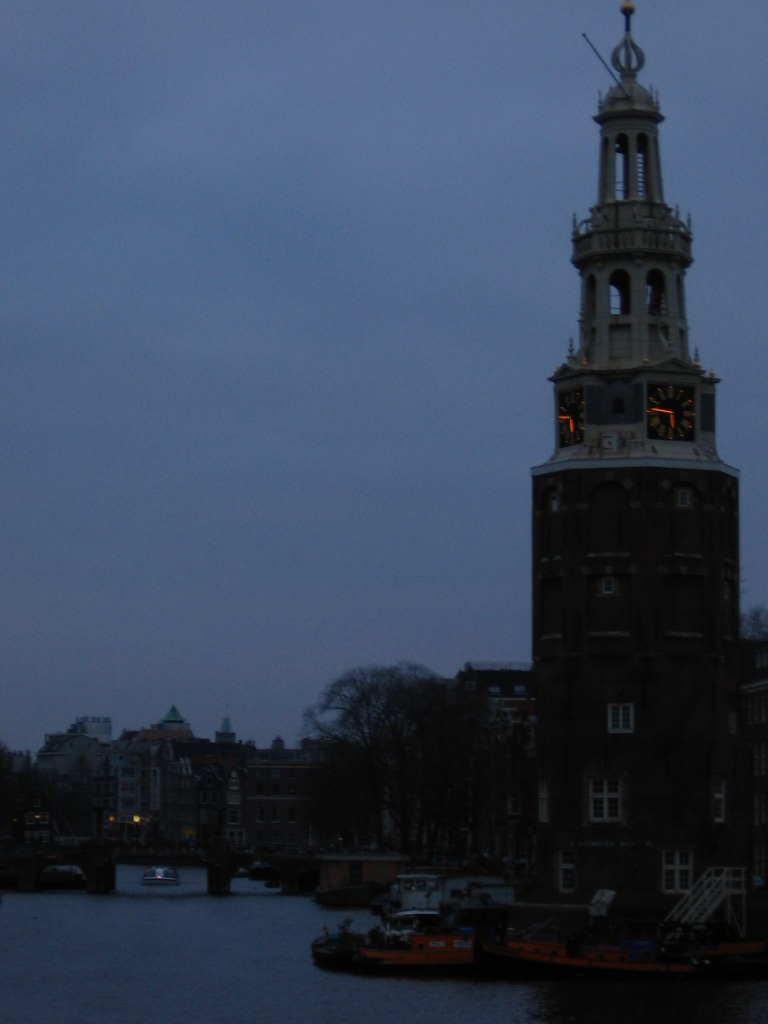
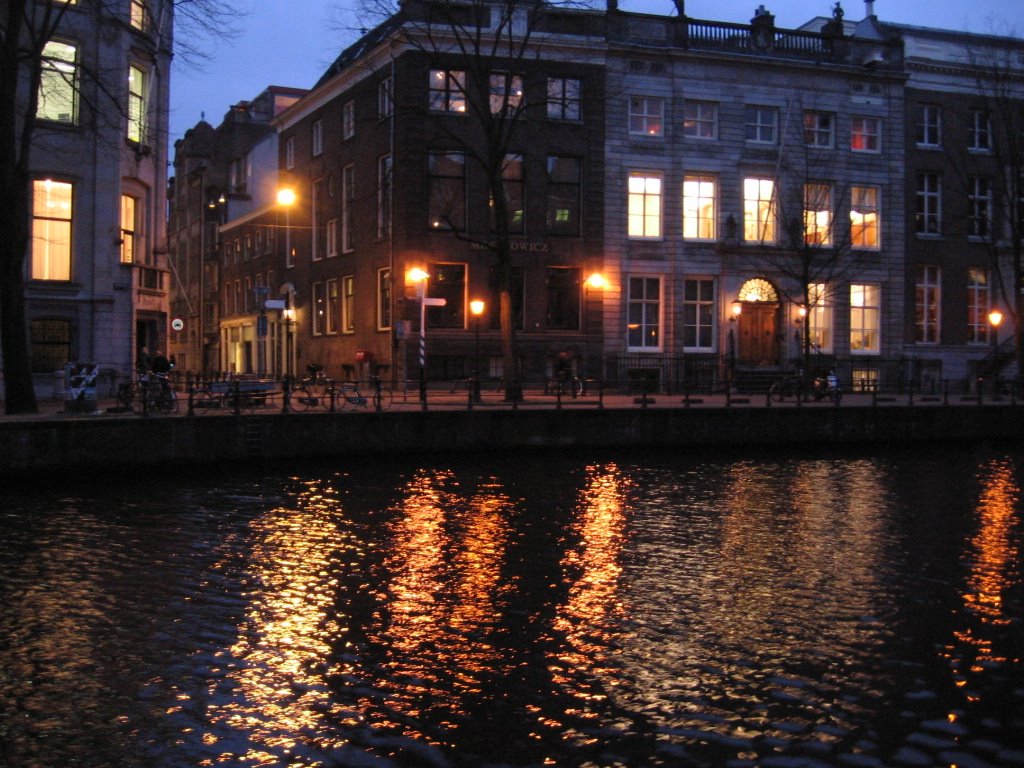
Amsterdam's a great city for reflection, especially on the main canals, which give lines of sight that shoot forward like long beams of light.


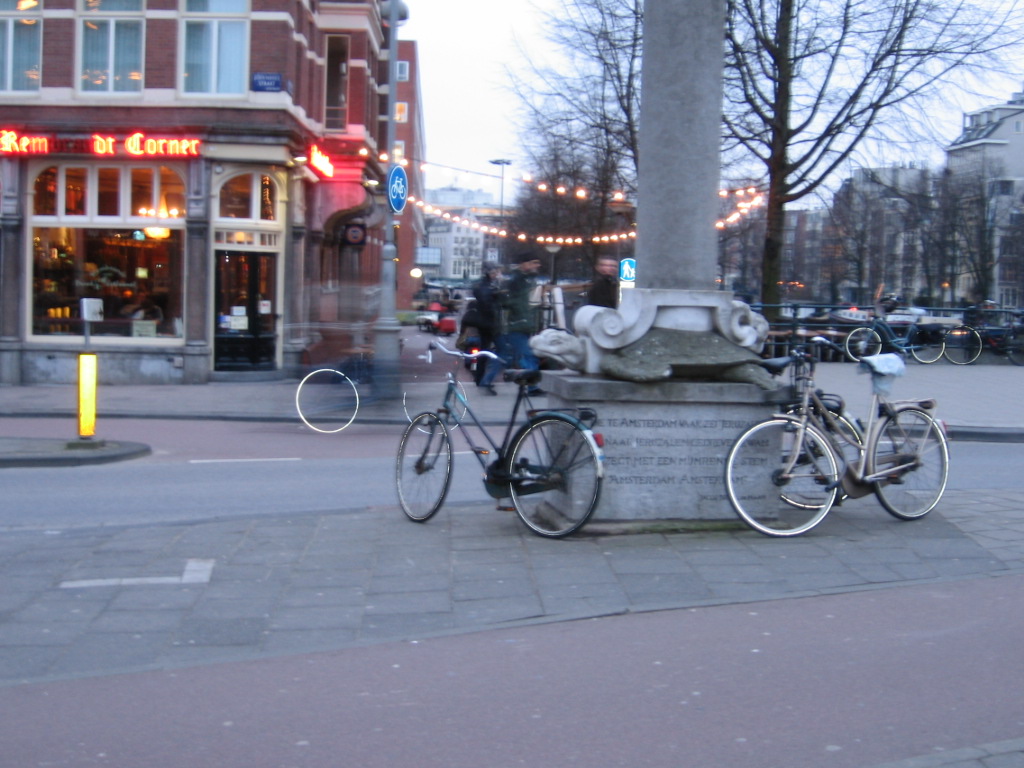
Look, there's a bike behiiiiiiind the statuuuuuueeeee.

Ahhhh...reflection....


In Rembrandt Square, two British or Australian dudes battled a choreographed ninja fight scene for the viewing pleasure of us.

This, with our new friend Ryan, who's a teacher in Wales, was the last picture taken before an unfortunate trip-and-fall incident. Luckily, my face broke my fall and only suffered some temporary reconfiguration, aside from some less-than-stalwart front teeth.

But our journey did not end, my friends. We had to complete our vision quest. And, in the final three posts, you shall be privy to how we achieved it.

3.13.2006

Amster-dam

Amsterdam, upon final inspection, is a city capable of causing one's skin to turn to worms. Barcelona was a bit uncomfortable, but this was like watching the scene in Swingers where Mikey calls the girl over and over again. But the daytime (even at -5 Celsius) has its redeeming qualities, and we saw it by bicycle, the only way to see Amsterdam. Well, not according to the guys who slink along the streets with their heads slung low over their shoulders, but, ya know.
The first night, we shared a couple of Ireland's favorite beverages, and Nils regaled me with stories of his ability to dry out the insides of bottles of Jameson. And then proved it.
But our hostel, the Flying Pig, was worthy of the international acclaim. Apparently it's the most popular one in the world, with a really cool staff and a bar downstairs with a big screen TV. We watched some Olympics and prepared for another day.
The Pig even got us discounts on bikes!

Most of the corners in the city looked a lot like this, with tall, angled buildings built sometime between 1200 and 2000. That's one of the weird parts about the city, that it's always been near the forefront of civilization but loses the historical luster because of some relaxed legislation.

So we pedaled on, not really sure of what to look for.

We, without a doubt, had to stop.


And so did whoever had to wear this.

Most of the torture devices were perfected and utilized by the Spanish during those couple of years when Torchemade inquired as to whether one would prefer to join the Roman Catholics.

He, of course, employed some coercion.
Nils is a ghooooooooost.
Ahhhhhh!
This was heated over fire. Then a human being was placed on it. Then cold water was dripped on him/her as an act of purification.


I really don't know what any of the monuments are, but they all seem to have been built with care.
The state house, to the north of the city, in front of a platz full of pigeons outnumbering people by about 50 to two-tenths.


They wouldn't let us stand next to the hot dog cart, where it was so warm.

Ahhh. Nils tells me Amsterdam has more canals than Venice. And more Dutch people.

Maybe could have taken this as a bad omen...

But stay tuned for the episode of Amsterdam at nighttime, when I made some superficial alterations to my face.

3.09.2006

Wiedersehen, Deutschland!

The town adequately vacant and our ecstasy adequately high, we carried about the town, looking for the three big churches and Roman ruins that are apparently the other big draw, aside from the wine. Instead, we got sidetracked by kitsch, in a store that sold beer steins made and painted in town, nutcrackers made and painted in town, amber melted and hardened in the forests around the town and Alcatraz Psycho Ward: Outpatient t-shirts. With a full knowledge of Boston, the owner enticed us to buy at least a reasonable amount of his products.


To celebrate, Nils rode the horse, to the horrification of the native Teutons.

Aha, but no, you aaaare.

On this street, more kitsch, including some corduroy German fedora-hats that German men wear when they're walking around their pretty towns.

By this time, my German had returned like springtime, so, like those people who try to show off by speaking another language, I was trying to show off by speaking another language. At one point, a befuddled Nils saw one of the churches and pointed, saying "This...thing...big."

It was big.

...and yet another pretty town beer.
So we bade goodbye to Boppard, and continued on our quest, moving mostly north and mostly quickly.

And we finally came upon Koblenz, where we decided to do a bit of hiking to the final castle before heading on to Cologne, one of the trip's main points.


Koblenz, because of its location at the confluence of the Rhein and Moselle, ingested quite a large amount of bombs in World War II, so most of the town is new, suburban, vinyl-sided row-houses. Not all that exciting, but we made our way up to the castle to see if it could offer redemption for the Wonderbread town.

At least we found what looked like to be a moat, and celebrated with ninja moves.

Then we remembered the very essence of our trip -- floating through Europe, pulling together energies garnered from sources everywhere. And we knew that Cologne on Thursday was to be incredible, the start of Karnival, a weeklong party before Ash Wednesday. So we made a quick decision to rearrange the schedule that had before been Cologne-Amsterdam-Belgium.

Amsterdam? On a whim? No.

Yes.

...and off we roared.

Hiatus because of the stressful internship

I'm beginning to feel a little run down by the city and the British, so I'm gonna try to get a little more sleep tonight. The post will come tomorrow to finish up the Rhein tour. It'll be worth it, promise. But for now, let this vast generalization of British culture SMASH INTO YOUR BRAINWAVES.

-The distance between a British person and well, everybody else, stems from the fact that the British lack one great cultural tenet imbedded in America. They don't possess that speeding and headlong, endless and brilliant pursuit of JOY. The sense that something greater is always out there, just one stretch of the arm away as long as we keep running forward as fast as we can. Darcey said maybe it's because these people are the ones who stayed in England when others went to America. My professor said it was because America is a land of vast cities, of tumbling forests and deserts, of mountains that scratch heaven and deserts hot as hell.

-PS - Had to call Manchester United today to talk to Wayne Rooney and Rio Ferdinand. Almost peed into my jeans. But nobody picked up.

3.07.2006

Northward on the river

Leaving the castle at 9 a.m., flinging our bodies onward, northbound to heaven (and St. Goar), all the while feasting on the delight of prospect and promise and the intoxication of movement. So we used the train to slide into yet another smallish town nestled against the Rhein with a castle surveying it, St. Goar. It's at a hairpin bend in the river, where the currents once swept boats into the rocks on the side, leading sailors to blame it on the Loreley rock and the siren who sat on top. We sang her song back in German class.

That being said, the way Germans treat women is really something. Nils made the observation on the first night we were there, at the Hofbrauhaus, where girls in dirndls (those puffy dress-type things you imagine when you think of boys in lederhosen) meander up and down the aisles between the tables, as men with minds drenched in beer buy cigarettes or pretzels from them. It's not exploitation, though. It's a form of great reverence for The Female, the wonderful and ethereal form of it, flowing and life-giving. Really cool, and, with enough experience as a dude, just very sweet and innocent.

So anyway, Loreley rock, right near the top of St. Goarsheim, on the East bank of the river. Used to sing the song to it (in iambic tetrameter!) in German class, so that was cool to be around it. Picked up a brochure, but didn't go to the rock, because it's hard to get there when most of the transport is in hibernation mode.

So we stayed on the Western side, at St. Goar, where the biggest and greatest castle on the Rhein sits. It's in ruins now, but for a while, was indestructible. When most of the castles faced their destruction at the end of the 17th century, Rheinfels stood intact until Napoleon stormed inside of it and blew much of it up.


There it is on the hill over St. Goar, another Lonely Planet-heavily-recommended sight. And who were we to go against LP? It had only led me wrong once before (see: Barcelona).

Nils stands in front of the cuckoo clock, which claimed to be the biggest one in the world. I'm not so sure about this. The Rheinland is pretty cool, but the Black Forest is the capital of cuckoos, according to an old German class presentation.

But before we could climb, we dropped our bags off at the tourism office. And then climb we did, attempting first to take the path that clearly led to the castle.

But we were thwarted by maintenance guys who were digging holes. So we took the alternate route, which turned out to be mostly an improvisation through the woods behind a hostel. Wet trees, bushes and berries really do a number on jeans. If you're planning to climb through forests to get to castles, see if you can pack two pairs of pantaloons.

But we made it, up to a car road. A real road!

Cars also took this way to the castle, where a sweet hotel and restaurant operates now.


The castle could keep the French out for a while, but couldn't do a number on this Swede.


Alas, the castle's gates only open in good weather during the winter season, so we were held.

...but could take a picture of the sweet town.

...and then, after walking back down, eat some sweet apple cake and cheese cake.

Stopping to take this car caused us to miss our train by a matter of 12 seconds. But the Bon Jovi Volkswagen requires reverence.

Goodbyyyeee, St. Goar!

Boppard, a town built around its tourism (reminds in certain parts of Rome, Massachusetts or Jersey) awaited.


We quickly made our way to the river in Boppard, where it snaps to the right beyond this church.

Hello!b
On occasion, the Rhein floods so high that it could drown Shaq if he were in town.

Aber Mutti, ich will, mehr zu wissen!

Nein, wir werden morgen wiederkommen!

(Back tomorrow, crazy babies)

3.04.2006

Evening sets on the Rhein

But man cannot live on flatbread pizza and only one type of Rheinland wine. So we pulled back, leaving our luggage and a comet trail of energies -- fused to the air as are all of the movements of the young -- in Bacharach. We'd spend the next day soaked in the northern part of the region and finish the rest of this fine evening in the South.


No more appropriate name for the town's pharmacy. Healed by the God of Wine.

The trains understood our ambitions, which, we are told by Lonely Planet, are shared by droves of tourists in the summertime. But winter, when the river runs brown and the mountains run brown and the sun barely shows, winter sees very little of the type of frenzied pursuit of everything that we brought to the scene.

That being said, we jumped the next train (they ran on the hour) south to Bingen, just 10 km south of Bacharach. But across the river sat Rudesheim, the wine capital of the region. Its hills, coated with vineyards that not only oversee the town, but sprout its life, its virility (and its money). Signs on the different hills mark the different types of grapes, from the reds to the whites, and a stationary chairlift hibernated until the colors of the valley come back in late spring.

We had to go, and thus, we did.


During the summertime, ferries run constantly from Bingen (the western shore) to Rudesheim, on the East. Today, unfortunately, only the car shuttle operated. So we jumped on the car shuttle.

A castle peers around the bend of the river.
Nils and I get across the river, where we see this sign.

Assmanhausen. The literal translation is something like place-for-men-to-eat (I think), but c'mon. Assman. Hausen. Kramer jokes were made.

Rudesheim, with its endless circling of cobblestone streets, sat almost entirely inoperative. The wine shops (Weingut...which means 'wine good') still featured ads in the windows, but featured doors locked to the world.

Of course, some places were still open, so we could take some shelter from air that had suddenly turned to a cold pool. It was heavier than the food we ate.

Thanks to Carl Ehrhard for bailing us out. The Riesling, as expected, did not disappoint.

Nor did the Franzozischzwiebelsuppe! (French onion soup, made with chicken broth and delicious cheese)

We caught the second-last ride back...
and imbibed the local brew to fortify ourselves against the thermal deprivation while we waited for the train.

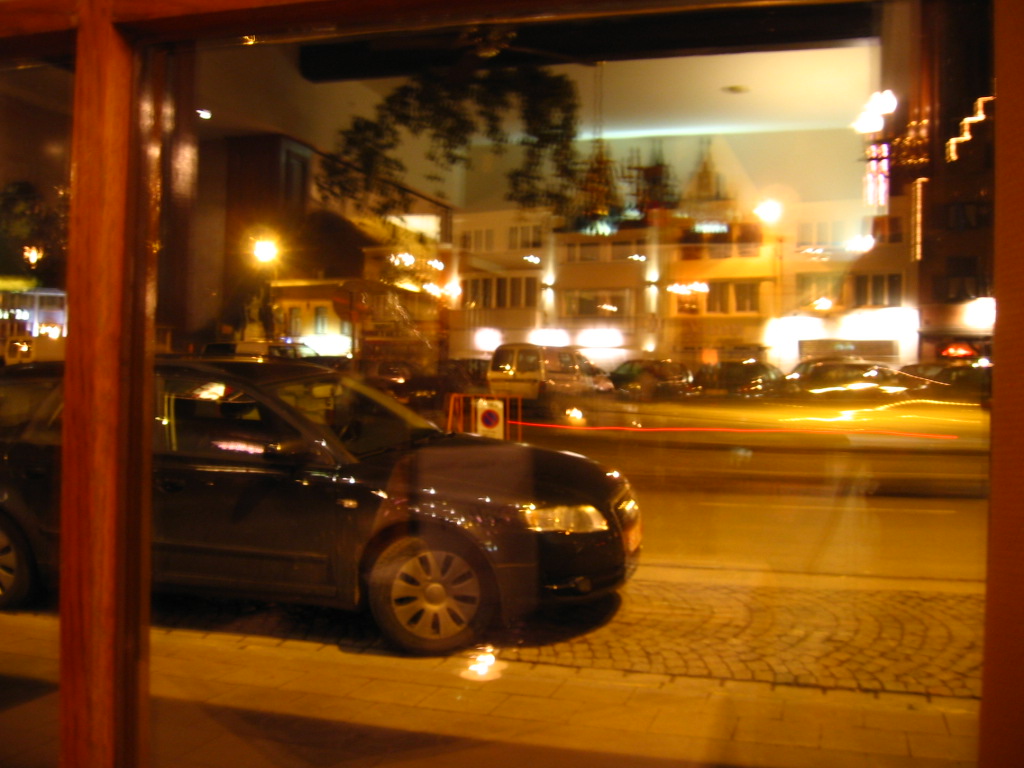
Thanks to the rain, though, for providing us the ability to create some photographic impressionism.


...and to the cold for making this church, destroyed by the French, even more eery. From this point on the way to the castle, there was no light except that reflected by the moon.


But we made it up there, and slept immediately. In the morning, we could have chosen any of these myriad snacks or even a game of ping-pong (slot 13), but we opted for the continental Fruhstuck (breakfast), a tour of German grains.

The rain had stopped and some Spanish tourists had too, long enough to take this.


And we depart the castle, leaving the protection-against-the-French duties to the Australian check-in woman.